BUYING GUIDE
Vinyl Wall Graphics or Direct-to-Wall Printing? An Honest Comparison
Vinyl wall graphics and direct-to-wall printing solve different problems. When each one is the right call, including when we'd tell you to choose vinyl.

If you are putting branding or artwork on an office, shop or restaurant wall, the quote you get will usually be for one of two things: a printed vinyl graphic stuck to the wall, or artwork printed straight onto the wall itself. They can look similar in a photo. They behave very differently over the years the wall has to live with them.
We print directly onto walls, so we have an obvious interest here. That is exactly why this guide starts with the jobs where vinyl is the better answer.
How each one works
Vinyl wall graphics are printed in a workshop onto a self-adhesive plastic film, usually laminated, then brought to site and applied by hand. Large walls are made up of panels that are overlapped or butted together.
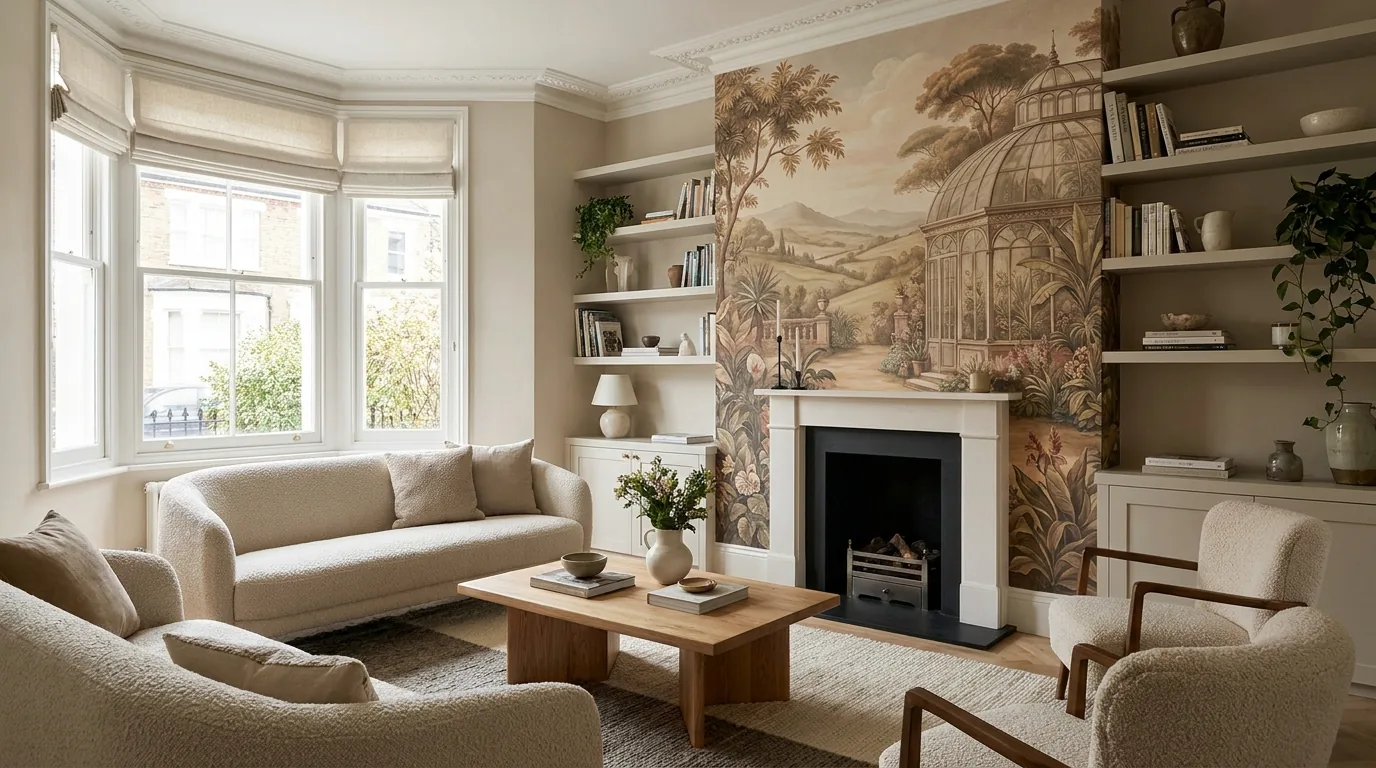
Direct-to-wall printing brings the printer to the wall. UV-curable ink is laid onto the surface and cured by UV light the instant it lands, so there is no film, no adhesive and no panel joins — the image is part of the wall's surface.
When vinyl is the better choice
- You need it gone cleanly later. A graphic that has to come off at the end of a promotion, an exhibition or a short let is what removable vinyl is for. A printed wall is not peeled off; it is primed and painted over like any other wall.
- The artwork changes often. Seasonal campaigns and rotating retail displays suit a material designed to be swapped.
- It is going on glass as a manifestation or window graphic. Frosted and cut-vinyl films do things on glazing that ink on a surface does not, such as privacy banding.
- Your landlord will not allow anything permanent. Check the lease before you commission either. Painting over a printed wall is normal redecoration, but some landlords still want it agreed in writing.
When printing onto the wall wins
- Textured surfaces. Standard vinyl will not grip exposed brick or rough concrete — it bridges the mortar lines and lifts. Specialist rough-wall films exist, but they are applied with heat and worked into the texture by hand, which is slow and skilled work. Ink goes into the texture as it prints. Our brick wall printing page shows what that looks like.
- Nothing to pick at. Every vinyl job has edges and, on a big wall, seams. In a busy reception, corridor or restaurant those are where lifting starts, often helped by fingernails and chair backs. A printed wall has no edge to catch.
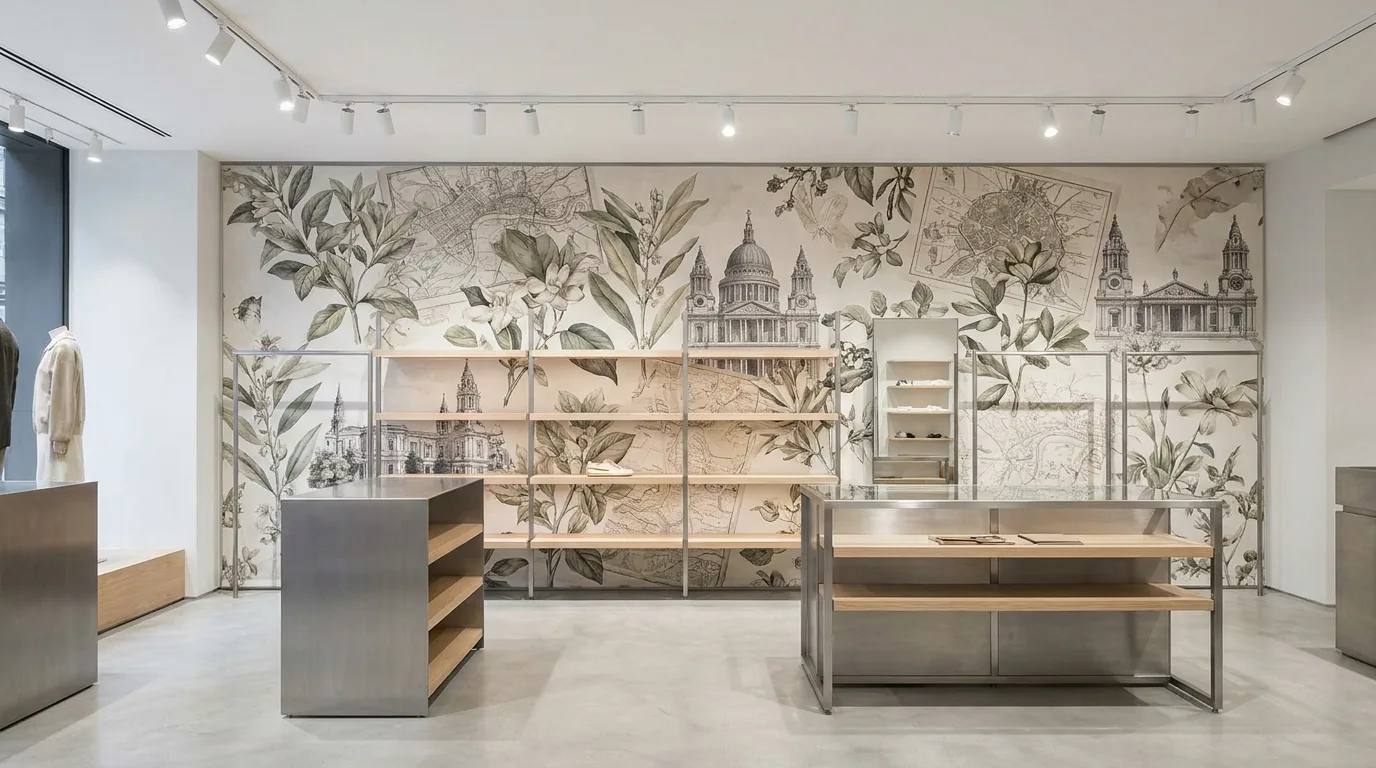
- No seams on wide walls. We print continuously along the wall, so a ten-metre mural is one image rather than a run of panels that have to line up.
- No plastic in the bin. Vinyl produces backing paper and offcuts on the day and a sheet of plastic film when it eventually comes down. A printed wall leaves neither.
- It is the permanent option. Office branding, a restaurant feature wall, a school corridor: things you expect to keep for years are the natural fit.
What neither one fixes
Both depend on the wall underneath. Vinyl on flaking or freshly painted walls can pull the paint off when it is removed, and ink printed onto blown plaster comes off with the plaster. Damp, live cracks and loose paint need sorting first either way — our wall preparation guide covers what to check.
One honest limit of our own: the printer cannot reach the very bottom and top of a wall. It prints up to 4.1m tall, with an unprinted band of roughly 36–45cm at the base and around 25cm at the top. Vinyl can be taken right to the skirting. In most rooms furniture, skirting or a dado occupies that band anyway, and we plan the design around it from the start.
How the cost compares
For a short-term graphic, vinyl is often cheaper, especially if a sign shop is printing several identical pieces. For a single permanent wall the gap narrows, because vinyl carries the cost of the film, lamination and a separate installation visit.
Our printing starts from £150 per square metre, and the price moves with the surface and the detail in the artwork. As a guide, a 4m × 2.5m feature wall on plaster comes to around £1,467–£1,723, and a 5m × 2.5m brick wall to around £2,330–£2,735. The full pricing guide explains what moves the number.
The short version
If it is temporary, changes often or lives on glass, use vinyl. If it is going on brick or concrete, needs to span a wide wall without joins, or is meant to stay, print it onto the wall. If you are weighing it up for a workplace, our office wall branding page goes into more detail. Or send a photo of the wall through the contact page and we will tell you honestly which one suits it, even if the answer is vinyl.